Women Empowerment
Focus Area

Women Empowerment

Expanding women’s access to skills, livelihoods, rights awareness, and healthcare, so they can build financial independence, make informed choices, and shape their own futures.

2,000+
Women Empowered
500+
GBV Awareness Sessions
200+
Scholarships Awarded
Our Strategy

A focused approach to lasting change.

01

1. Safety and Dignity: From Fear to Freedom

A woman cannot thrive if she does not feel safe. We are tackling the epidemic of Gender-Based Violence (GBV) at its roots. Through community-led safety initiatives and digital platforms, we are empowering women to talk freely about their rights, report abuse and challenge harmful gender stereotypes. Simultaneously, we work to shatter the silence around Sexual and Reproductive Health and Rights (SRHR). By normalizing conversations about menstrual hygiene and health, we are removing the shame and stigma that often force girls out of school and women out of the workforce. We are building a society where safety is a right, not a privilege.

02

2. Economic Resilience & Climate Adaptation

In Bangladesh, women are on the frontlines of the climate crisis. In coastal and rural regions, they bear the brunt of rising sea levels and environmental degradation. Our response is to turn these challenges into opportunities for leadership. We equip women with climate-smart agricultural skills and sustainable livelihood tools, transforming them from victims of climate change into guardians of resilience. By providing access to markets and financial literacy, we ensure they are not just surviving the changing climate, but building robust local economies that can withstand it.

03

3. Rewriting the Narrative: Breaking Stereotypes

Culture shifts before laws do. We are actively working to dismantle the deep-seated gender stereotypes that limit a woman’s potential from childhood. From rewriting classroom dynamics to ensure girls speak up, to supporting women in non-traditional roles—be it in sports, tech, or leadership—we are challenging society’s definition of what a woman "can" do. We are proving that capability has no gender.

04

4. The Path to Leadership: Higher Education

We believe in the power of women in high places. For meritorious young women held back by financial constraints, we provide a bridge to the future. Our scholarship programs for higher education are designed to create the next generation of female decision-makers, corporate leaders, and policymakers. We don't just want women to have a job; we want them to have a career and a voice at the decision-making table.

05

5. Institutional Strengthening & Advocacy

Change must be systemic. We work closely with local governance and institutions to ensure that policies are gender-responsive. By creating networks of women leaders who advocate for their own rights, we are strengthening the democratic fabric of the nation. We are fostering a coalition of "Women of the World" who support, mentor, and elevate one another.

Partner With Us to Create Change

For Individuals

Support women with livelihood training, higher education scholarships, and legal awareness.

For Corporate & Institutional Partners

Invest in a scalable, audited, and high-impact women empowerment model.

On The Ground

Active Projects

View all →
Featured Her Vote, Her Seat
active

Her Vote, Her Seat

Project Overview In the wake of Bangladesh's historic youth-led socio-political transition of 2024, a wave of democratic optimism swept the nation, with over 76% of the youth expressing a fierce desire to shape the future through their votes. Yet, beneath this optimism lies an urgent structural crisis: a widening gender gap in public governance and political leadership. While women constitute nearly half of the national electorate (49.25%), their substantive representation remains severely marginalized. Women make up a mere 4.09% of parliamentary candidates, and hold just 2.33% of directly elected seats. Furthermore, the removal of the historic 10% gender quota safety net in July 2024, paired with systemic masculine political cultures and targeted online and offline gender-based violence (GBV), has led to a worrying 14% complete civic retraction of existing female leaders. To shift this reality, "Her Vote, Her Seat" emerges as a transformative initiative. Supported by the Democratic Reforms through Inclusive Participation in Bangladesh (DRIP) project and BALLOT, and jointly implemented by JAAGO Foundation Trust and WADA, this project is a strategic movement. It operates across 8 highly diverse, vulnerable districts (Jamalpur, Patuakhali, Khulna, Bogura, Kurigram, Satkhira, Mymensingh, and Cox's Bazar) where zero directly elected women MPs emerged in the last parliament. We work to break down the social, institutional, and cultural walls that dictate where a woman belongs, turning traditional male gatekeepers into active enablers of change. Project Objective The overarching objective of "Her Vote, Her Seat" is to leverage Social and Behavior Change Communication (SBCC), community-led action, and strategic public relations to foster an inclusive democratic ecosystem in Bangladesh. Specifically, the project aims to: Dismantle Domestic Gatekeeping: Shift the Knowledge, Attitudes, Practices, and Norms (KAPN) of male family decision-makers (fathers, husbands, brothers) from restricting women's public visibility to actively supporting their political aspirations. Transform Community Perceptions: Sensitize local influencers, youth networks, and faith leaders to publicly champion inclusive governance and celebrate female political actors as essential role models. Drive Institutional Reform: Advocate within political parties, media houses, and local governance bodies to implement structured mentorship pipelines, equitable campaign financing, and strict internal anti-harassment mechanisms. Empower Grassroots Aspirants: Cultivate the leadership capacities, digital resilience, and civic literacy of potential grassroots female leaders, enabling them to move decisively from the household to the decision-making table. Core Activity & Expected Impact Using the multi-layered Socio-Ecological Model (SEM), the project simultaneously drives grassroots mobilization and national policy advocacy through interconnected activities: 1. Feminist Storytelling & Localized Media The Activity: Production and distribution of relatable, high-impact narrative tools—such as the journey of Mitu, a young woman who navigates and overcomes family restrictions to become a local leader with her family's backing. These tools are adapted into interactive community flipbooks, courtyard theaters, and widespread digital social media content. Expected Impact: Normalization of female leadership within traditional households and the inspiration of thousands of potential female candidates across rural Bangladesh to claim their space in civic life. 2. Community Engagement & Male Allyship Forums The Activity: Hosting localized dialogue forums and civic awareness workshops directly engaging husbands, fathers, male youth voters, and influential faith leaders across the 45 targeted parliamentary constituencies. Expected Impact: The shifting of deep-seated conservative social norms. Traditional gatekeepers transition into active allies who ensure women can attend civic consultations, join political platforms, and vote completely independently without fear of social backlash. 3. Institutional Advocacy & Safety Frameworks The Activity: Conducting multi-stakeholder national roundtables, capacity-building workshops, and media advocacy with political party committees, local government institutions, and media executives. Expected Impact: Adoption of gender-responsive internal codes of conduct, institutional safe-participation spaces, and a reduction in character assassination and gender-based violence (GBV) against women in political spheres. A true democracy cannot function on partial representation; it requires every voice to be heard and every vote to carry the weight of potential leadership. "Her Vote, Her Seat" is not just about placing a ballot in a box—it is about securing a permanent, rightful seat at the decision-making table for the women of Bangladesh. By restructuring social expectations from the kitchen to the parliament, this project ensures that supporting a woman's right to lead is recognized as responsible, progressive, and absolutely vital for national stability. When we secure her vote and ensure her seat, we strengthen the democratic fabric of the entire nation.

Read project →
Active Digital engagement and norms between adolescent girls and young women (AGYW) and their influencers in Bangladesh

Digital engagement and norms between adolescent girls and young women (AGYW) and their influencers in Bangladesh

Objectives Develop enhanced digital capacities and confidence, allowing AGYW to engage meaningfully with online platforms, access services, and leverage digital tools for education, employment, and social empowerment. Project Summary In Bangladesh, many adolescent girls and young women (AGYW) face significant barriers to accessing digital technologies due to restrictive social norms. These norms, often upheld by their parents, siblings, and husbands, dictate what is considered acceptable behaviour for girls, including restrictions on their use of mobile phones and the internet. As a result, AGYW are less likely to own smartphones or use the internet compared to boys, limiting their opportunities for education, health information, and income-generating activities. Research has shown that these gender-based digital restrictions are deeply rooted in cultural expectations, and while mobile technology has the potential to improve the lives of AGYW greatly, these social norms prevent them from fully engaging with digital tools. Addressing these barriers is essential to ensuring that AGYW can access the same opportunities as their male peers, enabling them to thrive in today’s increasingly digital world. To tackle these challenges, the JAAGO Foundation is launching an intervention focused on shifting these digital norms and empowering AGYW to make use of digital technologies safely and effectively. The project will begin with the development of a comprehensive training module, created in partnership with BBC Media Action. This module will be designed for three groups—AGYW, their digital gatekeepers (such as parents, older siblings, and husbands), and adolescent boys and young men. It will cover topics like digital literacy, safe online practices, and gender-sensitive communication, with a focus on challenging the restrictive digital norms that AGYW face. The materials will be adaptable to both urban and semi-urban contexts, ensuring that the content is relevant and practical for all participants. In addition to the module development, the project will recruit and train 40 Master Trainers from Dhaka and Khulna. These trainers will undergo intensive training to equip them with the skills to effectively facilitate the modules. The next step will be to recruit 2,000 participants, including 800 AGYW, 800 digital gatekeepers, and 400 adolescent boys and young men, ensuring a diverse and representative group from the target communities. These participants will engage in a series of three half-day training sessions, where they will learn how to use digital tools safely and support each other in overcoming the barriers imposed by restrictive norms. The training will include role-playing, group discussions, and practical demonstrations to enhance understanding and participation. By the end of the project, the goal is to have shifted both personal and community-level attitudes towards digital technology, empowering AGYW to take full advantage of digital opportunities without the limitations of outdated social expectations.

Read project →
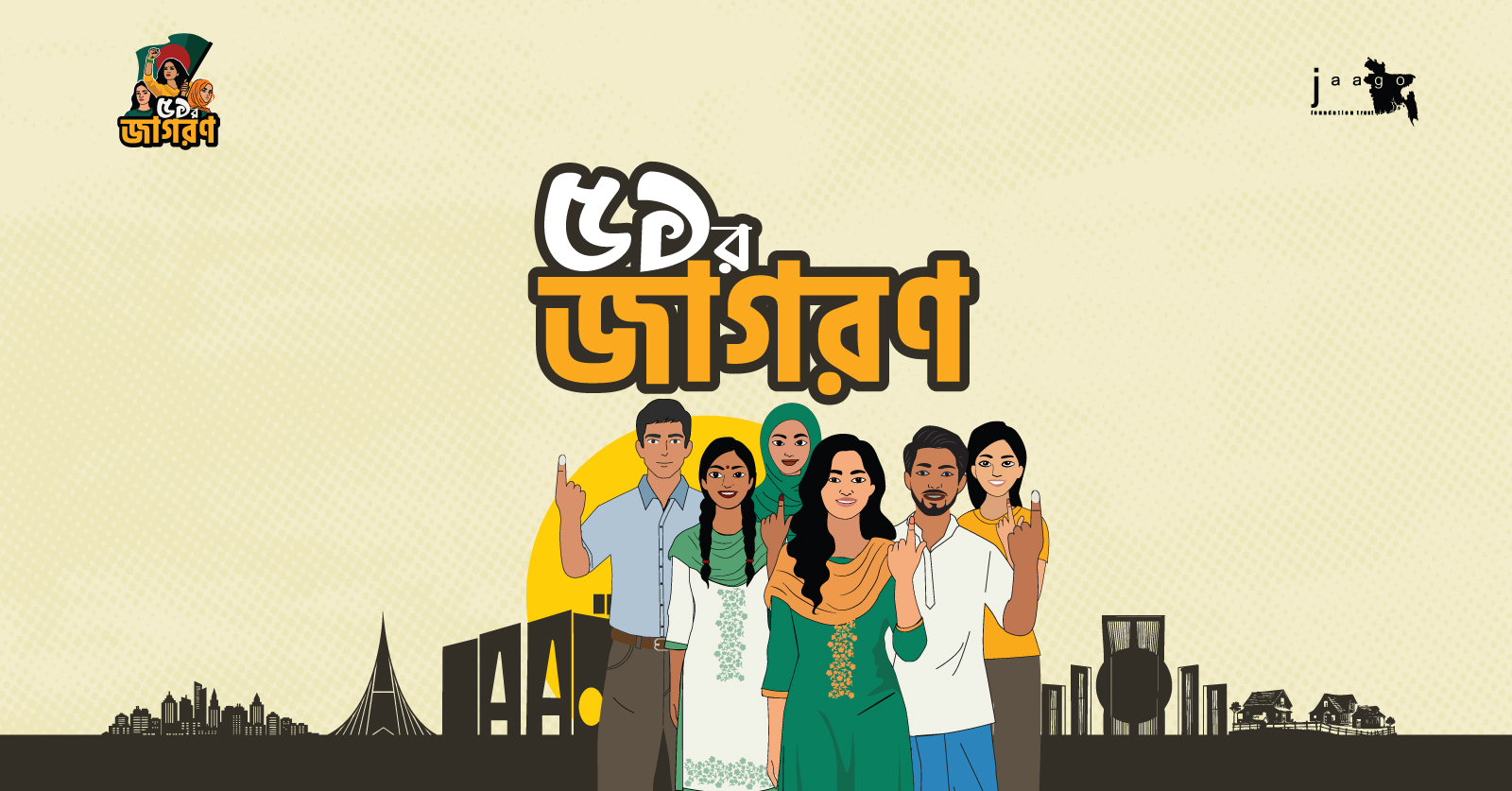
Active Ekannor JAAGORON (Rise of 51)

Ekannor JAAGORON (Rise of 51)

Objectives To enhance youth leadership and civic engagement, and equip marginalised youth, women, and PwDs with the knowledge and skills to actively participate in democratic processes, fostering accountability and good governance across Bangladesh. Project Summary The AHEAD Bangladesh Project, funded by the European Union through the European Partnership for Democracy (EPD), is a nationwide initiative designed to empower youth and women by enhancing civic education, leadership skills, and active participation in the electoral process nationwide. The project aims to address the low levels of voter participation among women and youth—particularly in rural areas—and to equip them with the knowledge and confidence needed to actively participate in elections. At the heart of this project is the belief that every vote counts and that empowering women to exercise their right to vote is essential for building an inclusive, accountable, and participatory democracy in Bangladesh. The project will train 24 youth leaders as master trainers in a national training program, 4 for each division, to serve as trainers and mentors, spreading knowledge and guiding their peers through the voter education process. The master trainers will then conduct divisional trainings, where 2 youth from each of the 300 constituencies of Bangladesh will participate. These 600 youth participants, selected from across Bangladesh, will take part in training sessions and conduct community outreach programs, where they will engage directly with local communities. They will be trained to facilitate civic education sessions in their constituencies, specifically targeting first-time voters and women, who have historically been underrepresented in the electoral process. As part of this training, youth will also lead 300 community action projects, which will be designed to directly engage local citizens in conversations about the importance of voter participation and choosing candidates that represent their interests. One of the central components of this initiative is “Ekannor JAAGORON”, a digital awareness campaign which is focused on women’s empowerment, aiming to raise awareness about women’s voting rights and the critical role women can play in the electoral process. Although women represent 51% of the population, their rights and demands are often overlooked in national policies. Through social media platforms, online tools, and community-driven digital campaigns, the project seeks to create a unified awareness among women about the importance of their vote and how they can impact the future of the country by selecting the right candidates. These campaigns are designed to highlight how choosing leaders who prioritise women’s rights, gender equality, and inclusive policies can improve healthcare, education, workplace safety, and legal protections for women across Bangladesh. By educating women on these issues, the campaign will inspire active participation in the electoral process, making women more aware of the power they hold in shaping the policies that affect their lives. The overarching goal of the AHEAD Bangladesh Project is to bridge the gap in civic knowledge among young women and youth across Bangladesh. By fostering democratic values, increasing electoral awareness, and ensuring that women know their rights and their power within the electoral system, the project will ensure that women’s voices are heard and represented in the political process. Furthermore, this project will help build an environment where youth and women not only vote, but also influence the creation of policies and laws that affect their lives and communities. The project will focus on community outreach, ensuring that electoral engagement goes beyond traditional voter education and instead promotes a holistic approach to civic participation. The digital campaign, alongside community-based training programs, will work together to create a movement for empowered women voters, ensuring their active role in selecting leaders who will push for gender-sensitive policies. Ultimately, the project will build a stronger, more inclusive democracy in Bangladesh, where youth and women are not only voters but active contributors to the nation’s future.

Read project →