Our Work

Initiatives that rewrite futures.

From classrooms in remote villages to climate-resilient communities — explore the programmes JAAGO Foundation runs across Bangladesh.

15
Ongoing Initiatives
43
Impact Programmes Delivered
456,804
Lives Reached

Ongoing Initiatives

Showing 15 initiatives
Ongoing
Women Governance
Her Vote, Her Seat

Her Vote, Her Seat

Project Overview In the wake of Bangladesh's historic youth-led socio-political transition of 2024, a wave of democratic optimism swept the nation, with over 76% of the youth expressing a fierce desire to shape the future through their votes. Yet, beneath this optimism lies an urgent structural crisis: a widening gender gap in public governance and political leadership. While women constitute nearly half of the national electorate (49.25%), their substantive representation remains severely marginalized. Women make up a mere 4.09% of parliamentary candidates, and hold just 2.33% of directly elected seats. Furthermore, the removal of the historic 10% gender quota safety net in July 2024, paired with systemic masculine political cultures and targeted online and offline gender-based violence (GBV), has led to a worrying 14% complete civic retraction of existing female leaders. To shift this reality, "Her Vote, Her Seat" emerges as a transformative initiative. Supported by the Democratic Reforms through Inclusive Participation in Bangladesh (DRIP) project and BALLOT, and jointly implemented by JAAGO Foundation Trust and WADA, this project is a strategic movement. It operates across 8 highly diverse, vulnerable districts (Jamalpur, Patuakhali, Khulna, Bogura, Kurigram, Satkhira, Mymensingh, and Cox's Bazar) where zero directly elected women MPs emerged in the last parliament. We work to break down the social, institutional, and cultural walls that dictate where a woman belongs, turning traditional male gatekeepers into active enablers of change. Project Objective The overarching objective of "Her Vote, Her Seat" is to leverage Social and Behavior Change Communication (SBCC), community-led action, and strategic public relations to foster an inclusive democratic ecosystem in Bangladesh. Specifically, the project aims to: Dismantle Domestic Gatekeeping: Shift the Knowledge, Attitudes, Practices, and Norms (KAPN) of male family decision-makers (fathers, husbands, brothers) from restricting women's public visibility to actively supporting their political aspirations. Transform Community Perceptions: Sensitize local influencers, youth networks, and faith leaders to publicly champion inclusive governance and celebrate female political actors as essential role models. Drive Institutional Reform: Advocate within political parties, media houses, and local governance bodies to implement structured mentorship pipelines, equitable campaign financing, and strict internal anti-harassment mechanisms. Empower Grassroots Aspirants: Cultivate the leadership capacities, digital resilience, and civic literacy of potential grassroots female leaders, enabling them to move decisively from the household to the decision-making table. Core Activity & Expected Impact Using the multi-layered Socio-Ecological Model (SEM), the project simultaneously drives grassroots mobilization and national policy advocacy through interconnected activities: 1. Feminist Storytelling & Localized Media The Activity: Production and distribution of relatable, high-impact narrative tools—such as the journey of Mitu, a young woman who navigates and overcomes family restrictions to become a local leader with her family's backing. These tools are adapted into interactive community flipbooks, courtyard theaters, and widespread digital social media content. Expected Impact: Normalization of female leadership within traditional households and the inspiration of thousands of potential female candidates across rural Bangladesh to claim their space in civic life. 2. Community Engagement & Male Allyship Forums The Activity: Hosting localized dialogue forums and civic awareness workshops directly engaging husbands, fathers, male youth voters, and influential faith leaders across the 45 targeted parliamentary constituencies. Expected Impact: The shifting of deep-seated conservative social norms. Traditional gatekeepers transition into active allies who ensure women can attend civic consultations, join political platforms, and vote completely independently without fear of social backlash. 3. Institutional Advocacy & Safety Frameworks The Activity: Conducting multi-stakeholder national roundtables, capacity-building workshops, and media advocacy with political party committees, local government institutions, and media executives. Expected Impact: Adoption of gender-responsive internal codes of conduct, institutional safe-participation spaces, and a reduction in character assassination and gender-based violence (GBV) against women in political spheres. A true democracy cannot function on partial representation; it requires every voice to be heard and every vote to carry the weight of potential leadership. "Her Vote, Her Seat" is not just about placing a ballot in a box—it is about securing a permanent, rightful seat at the decision-making table for the women of Bangladesh. By restructuring social expectations from the kitchen to the parliament, this project ensures that supporting a woman's right to lead is recognized as responsible, progressive, and absolutely vital for national stability. When we secure her vote and ensure her seat, we strengthen the democratic fabric of the entire nation.
Ongoing
Environment
SHIELD - Strengthening Hope, Integrated Emergency Leadership, and Disaster Preparedness

SHIELD - Strengthening Hope, Integrated Emergency Leadership, and Disaster Preparedness

Objective To enhance disaster resilience and climate change adaptation in coastal communities of Bangladesh by strengthening local leadership, school-based preparedness, and sustainable livelihoods, ensuring that vulnerable populations are equipped to respond to and recover from climate-induced disasters. Project Summary The SHIELD project, implemented by JAAGO Foundation Trust in the Khulna and Bagerhat districts, is a comprehensive initiative designed to address the increasing climate vulnerabilities of coastal Bangladesh. As a region frequently impacted by cyclones, tidal surges, and salinity intrusion, there is a critical need for integrated disaster risk reduction (DRR) and climate change adaptation (CCA) strategies. At the heart of this project is the belief that building community resilience requires a multi-layered approach that empowers children, school authorities, and local government representatives to lead emergency response and preparedness efforts. The project will target over 1,910 direct participants and reach approximately 20,600 indirect beneficiaries through a series of structured interventions. A significant component of the program focuses on school-based DRR, engaging 1,200 children and 180 school authorities to create safer learning environments and foster a culture of preparedness from a young age. These groups will be trained to identify risks and implement safety protocols, ensuring that schools serve as resilient hubs during emergencies. Additionally, the project will strengthen local governance by training 40 local government representatives to integrate climate-smart planning into their administrative frameworks. One of the central components of this initiative is the mobilization of Community-Based DRR Committees (CBDRRC) and Community-Based Emergency Response Teams (CBERT). By training 80 dedicated emergency responders and 60 committee members, the project establishes a grassroots frontline capable of rapid mobilization during disasters. Furthermore, SHIELD promotes economic resilience by supporting 350 women and youth in climate-smart livelihoods. These participants will receive training in adaptive agricultural practices and alternative income-generating activities to mitigate the economic impact of climate change. By diversifying livelihoods, the project helps families build the financial buffer necessary to recover quickly from environmental shocks. The overarching goal of the SHIELD project is to bridge the gap between national climate policies and grassroots implementation in the coastal belt. By fostering local leadership and ensuring that marginalized voices—particularly women and youth—are at the forefront of disaster management, the project ensures that community response is both inclusive and sustainable. Furthermore, this project will help build an environment where local institutions not only manage crises but also influence long-term climate adaptation strategies. Ultimately, the SHIELD project will build a stronger, more resilient future for the communities of Khulna and Bagerhat, where local leaders and citizens are active contributors to the nation’s climate security.

Ongoing
Education
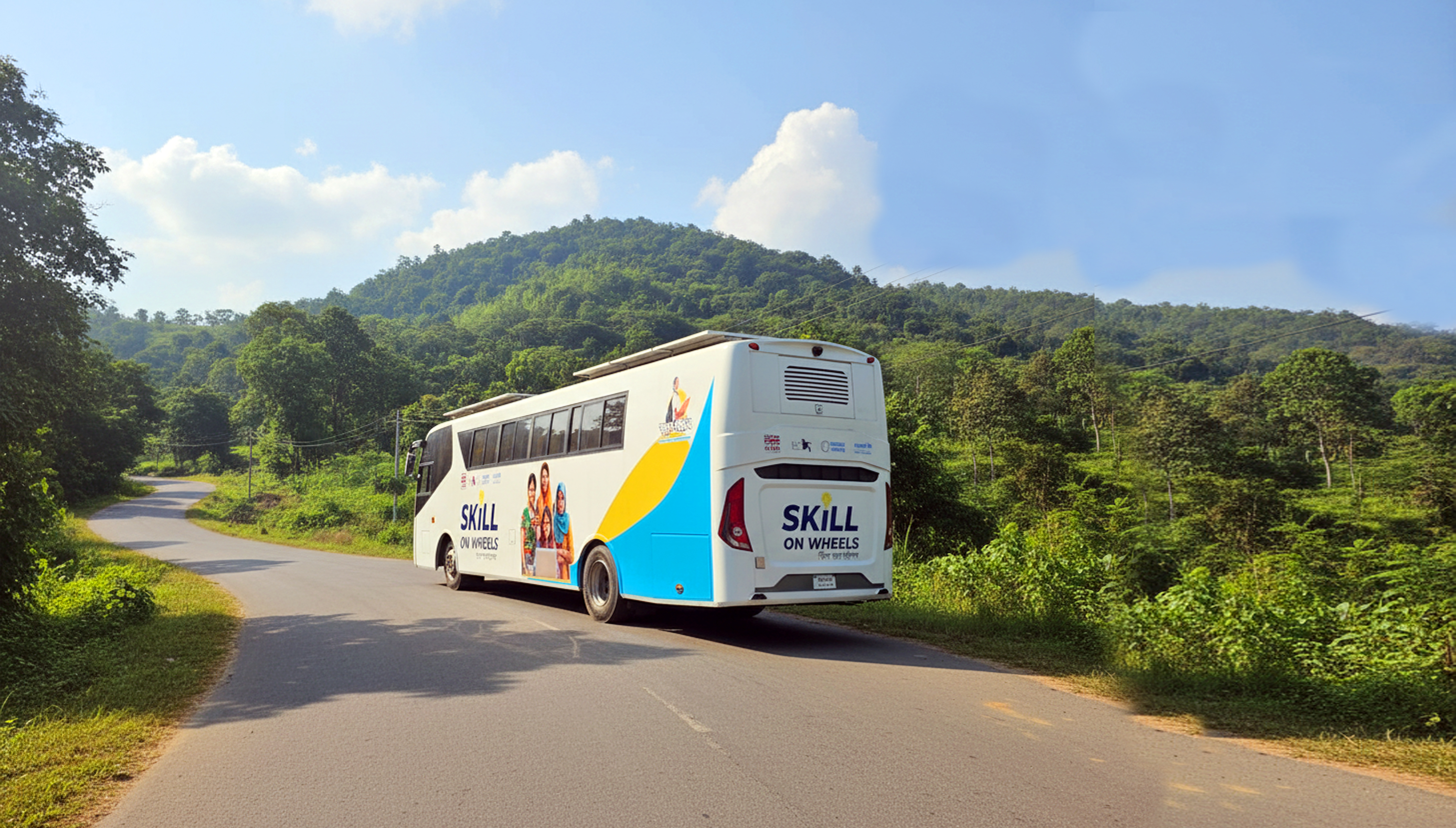
Skills on Wheels

Skills on Wheels

Objective To empower and equip adolescent girls and young women in remote areas with essential technical, vocational, and personal development skills, fostering a safe and supportive environment that enhances their future employability and independence. Project Summary The Skills on Wheels Initiative, implemented by JAAGO Foundation Trust (JFT) with support from the Girls' Education and Skills Partnership (GESP)—managed by Generation Unlimited (GenU) UNICEF and the Foreign, Commonwealth & Development Office (FCDO)—is a mobile outreach program designed to deliver inclusive, employment-focused training to marginalized populations. The project specifically addresses the critical challenges faced by adolescent girls and young women aged 13 to 24 in the geographically remote and underserved districts of Cox’s Bazar and Bandarban. At the heart of this initiative is the belief that mobile accessibility is the key to overcoming entrenched barriers such as challenging terrain, socio-economic constraints, and restrictive cultural norms that frequently limit women's mobility and participation in traditional training centers. The project will deploy a fully equipped Mobile Training Unit (MTU) that travels across eight upazilas—including Ramu, Chakaria, and Ukhiya in Cox’s Bazar, and Lama, Alikadam, and Nikhongchhari in Bandarban—over an 18-month period. Through a rotational model, the MTU will host intensive vocational training sessions for batches of 20 participants at a time, providing approximately 30 instructional hours per batch. These participants, selected from vulnerable groups including those who are not in education, employment, or training (NEET), will receive specialized technical modules such as advanced agriculture, digital marketing, and craftsmanship, alongside foundational "Employment Readiness" and "Passport 2 Earning (P2E)" digital literacy programs. A central component of this initiative is the emphasis on community engagement and safety. The program will reach approximately 24,000 community members through behavior change campaigns designed to address gender stereotypes and create a supportive ecosystem for women's professional participation. To ensure the long-term impact of the training, the project also facilitates direct linkages with potential employers, career counseling, and job placement support within 15 days of course completion. By providing on-site training within a secure environment, the initiative simultaneously mitigates risks of child marriage and exploitation while contributing to the economic resilience of families. The overarching goal of the Skills on Wheels Initiative is to bridge the skills divide between urban and rural areas for young women in southeastern Bangladesh. By fostering technical competencies and ensuring that local communities are actively involved in the development process, the project ensures that the voices and potential of marginalized youth are recognized and represented. Ultimately, this project contributes to a more inclusive workforce and a sustainable future where adolescent girls and young women are empowered as active contributors to their communities and the nation’s economic progress.

Ongoing
Youth
Youth Leadership Development Program  (DASRA / FYL Grants)

Youth Leadership Development Program (DASRA / FYL Grants)

Objective To enhance youth leadership and civic engagement across Bangladesh by equipping youth leaders with the cognitive, inclusive leadership, and human-centered design skills necessary to drive decentralized development and community action. Project Summary The Youth Leadership Development Program, supported through the FYL (Ful for Youth Leadership) Grants Program, is a nationwide initiative designed to empower youth by providing flexible and boundless support to grassroots organizations. The project aims to address the traditional power dynamics that often limit small or rural youth groups and to equip them with the knowledge and resources needed to lead local development. At the heart of this project is the belief that every youth leader’s potential matters and that shifting power to the local level is essential for building an inclusive and self-reliant democracy in Bangladesh. The project will engage over 2,100 youth leaders across all 8 divisions of Bangladesh, including 497 divisional and district leaders and 1,600 youth at the upazila level. These participants, selected from the Volunteers for Bangladesh (VBD) network and other local groups, will take part in 14 daylong residential training sessions and conduct community outreach programs. They will be trained to lead Community Action Projects in their constituencies, specifically targeting local challenges through the use of human-centered design and inclusive leadership strategies. As part of this training, youth will also participate in a comprehensive needs assessment designed to identify and bridge specific skill gaps in their respective regions. One of the central components of this initiative is the decentralization of leadership through the training of specialized Youth Coordinators. Through these coordinators, the project seeks to create a unified network of empowered youth who can impact the future of the country by implementing locally relevant solutions. These training sessions are designed to highlight how inclusive leadership and cognitive development can improve civic participation and community resilience across Bangladesh. By educating youth on these leadership principles, the program will inspire active community service, making young people more aware of the power they hold in shaping the local policies that affect their lives. The overarching goal of the Youth Leadership Development Program is to bridge the gap in leadership opportunities for youth in marginalized and rural areas. By fostering democratic values and ensuring that youth have the skills to manage their own projects, the project will ensure that grassroots voices are heard and represented in the national development agenda. Furthermore, this project will help build an environment where youth not only serve as volunteers but also influence the social and economic progress of their communities. The project will focus on community-led action, ensuring that leadership development goes beyond basic training and instead promotes a holistic approach to civic responsibility. Ultimately, the project will build a stronger, more inclusive society in Bangladesh, where youth are active contributors to the nation’s future.

Ongoing
Youth
NexGen Graduate Fellowship Programme (NAGORIKATA)

NexGen Graduate Fellowship Programme (NAGORIKATA)

Objective To create an experiential, technology-enabled, and personalised fellowship that cultivates holistic development spanning personal growth, professional development, and cross-sector capabilities—enabling youth to unlock their full potential and become confident agents of change. Project Summary The NexGen Graduate Fellowship Programme, implemented by JAAGO Foundation Trust and YouthNet Global under the Nagorikata: Civic Engagement Fund (CEF), is a transformative initiative designed to empower Bangladeshi youth by providing integrated life skills, professional competencies, and real-world exposure. The project aims to address the critical gaps in holistic development where current programs often focus narrowly on formal education rather than the adaptability and resilience needed for success in evolving contexts. At the heart of this project is the belief that shifting from traditional civic activism to an experiential model is essential for fostering a generation of leaders capable of navigating the interconnected realities of governance, the private sector, and civil society. The project will facilitate a six-month modular fellowship journey, offering a technology-enabled platform that integrates immersive placements within a Quad-Helix framework. Fellows will participate in intensive capacity-building sessions during the first three months, focusing on emotional intelligence, systems thinking, and digital literacy. These participants, selected from diverse backgrounds including early-career professionals and recent graduates, will then transition into three-month sectoral practicums within host institutions. They will be trained to apply their learning to practical, real-world challenges, specifically targeting the improvement of community-based outcomes and institutional responsiveness. As part of this journey, fellows will engage in cross-sectoral collaboration to bridge the gap between young people and the institutional environments of government and academia. One of the central components of this initiative is the creation of a sustainable network of alumni changemakers and the establishment of cross-sector referral linkages. Through residential training and mentorship, the project seeks to create a unified movement of resilient, future-ready leaders who can influence national development priorities. These interventions are designed to highlight how cross-sectoral synergy can drive innovative solutions for societal progress across Bangladesh. By equipping youth with these advanced capabilities, the program will inspire active participation in civic life, making fellows more aware of the impact they can hold in shaping a more inclusive and responsive nation. The overarching goal of the NexGen Graduate Fellowship Programme is to bridge the gap in professional and personal development among young people across Bangladesh. By fostering youth agency and ensuring that young leaders are equipped with the skills to collaborate across different sectors, the project will ensure that youth voices are represented in decision-making processes. Furthermore, this project will help build an environment where youth not only participate in development but also drive the creation of inclusive policies that affect their communities. The project will focus on experiential learning, ensuring that youth leadership goes beyond theoretical knowledge and instead promotes a holistic approach to professional and civic excellence. Ultimately, the project will build a stronger, more resilient future for Bangladesh, where young people are active contributors to the nation's social, economic, and environmental progress. For more details visit the Nagorikata website: https://www.nagorikata-cef.org/en

Ongoing
Gender
Digital engagement and norms between adolescent girls and young women (AGYW) and their influencers in Bangladesh

Digital engagement and norms between adolescent girls and young women (AGYW) and their influencers in Bangladesh

Objectives Develop enhanced digital capacities and confidence, allowing AGYW to engage meaningfully with online platforms, access services, and leverage digital tools for education, employment, and social empowerment. Project Summary In Bangladesh, many adolescent girls and young women (AGYW) face significant barriers to accessing digital technologies due to restrictive social norms. These norms, often upheld by their parents, siblings, and husbands, dictate what is considered acceptable behaviour for girls, including restrictions on their use of mobile phones and the internet. As a result, AGYW are less likely to own smartphones or use the internet compared to boys, limiting their opportunities for education, health information, and income-generating activities. Research has shown that these gender-based digital restrictions are deeply rooted in cultural expectations, and while mobile technology has the potential to improve the lives of AGYW greatly, these social norms prevent them from fully engaging with digital tools. Addressing these barriers is essential to ensuring that AGYW can access the same opportunities as their male peers, enabling them to thrive in today’s increasingly digital world. To tackle these challenges, the JAAGO Foundation is launching an intervention focused on shifting these digital norms and empowering AGYW to make use of digital technologies safely and effectively. The project will begin with the development of a comprehensive training module, created in partnership with BBC Media Action. This module will be designed for three groups—AGYW, their digital gatekeepers (such as parents, older siblings, and husbands), and adolescent boys and young men. It will cover topics like digital literacy, safe online practices, and gender-sensitive communication, with a focus on challenging the restrictive digital norms that AGYW face. The materials will be adaptable to both urban and semi-urban contexts, ensuring that the content is relevant and practical for all participants. In addition to the module development, the project will recruit and train 40 Master Trainers from Dhaka and Khulna. These trainers will undergo intensive training to equip them with the skills to effectively facilitate the modules. The next step will be to recruit 2,000 participants, including 800 AGYW, 800 digital gatekeepers, and 400 adolescent boys and young men, ensuring a diverse and representative group from the target communities. These participants will engage in a series of three half-day training sessions, where they will learn how to use digital tools safely and support each other in overcoming the barriers imposed by restrictive norms. The training will include role-playing, group discussions, and practical demonstrations to enhance understanding and participation. By the end of the project, the goal is to have shifted both personal and community-level attitudes towards digital technology, empowering AGYW to take full advantage of digital opportunities without the limitations of outdated social expectations.